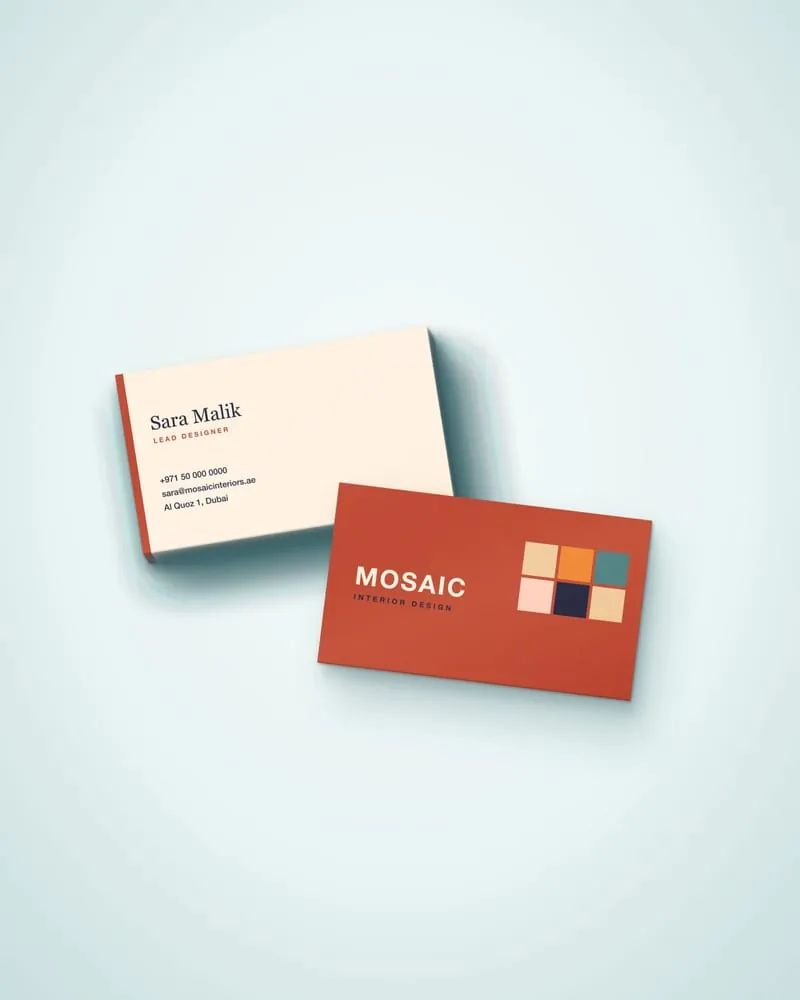
Two business cards can have the same design and still feel completely different in the hand. The difference is usually the finish. It’s one of the cheapest ways to make a card feel premium, and one of the easiest to get wrong. Here’s how the main options compare.
Matte lamination
Matte gives a smooth, non-reflective surface that looks calm and professional. It’s easy to read under office lighting, resists fingerprints and suits most corporate brands. If you’re not sure, matte is the safe choice.
Gloss lamination
Gloss makes colours look brighter and photos more vivid. It works well for creative, food and retail brands with bold colour. The trade-off is glare under bright light, and it can be harder to write on.
Soft-touch (velvet) lamination
Soft-touch has a velvety feel that people notice the moment they pick the card up. It’s popular with luxury, real estate and hospitality brands. Pair it with foil or spot UV for contrast.
Foil and spot UV
- Foil adds a metallic layer, usually gold, silver or rose gold, to a logo or name. A little goes a long way.
- Spot UV adds a raised, glossy coating to selected areas, such as a logo on a matte card.
- 3D UV builds the coating up further so you can feel it with your fingertip.
Square or rounded corners?
Square corners are classic and fit card holders neatly. Rounded corners feel friendlier and resist dog-earing in wallets. Die-cut shapes are memorable but cost more and may not fit standard holders.
Our quick recommendation
For most businesses in Dubai, a matte or soft-touch card with one accent, foil or spot UV on the logo, gives the best balance of cost and impact. Browse our business card options, or ask for a quote and we’ll send samples of the finishes you’re considering.